
30th Anniversary of Victory in the Patriotic War: The 2023 Abkhazia Commemorative Banknote and the History It Honors
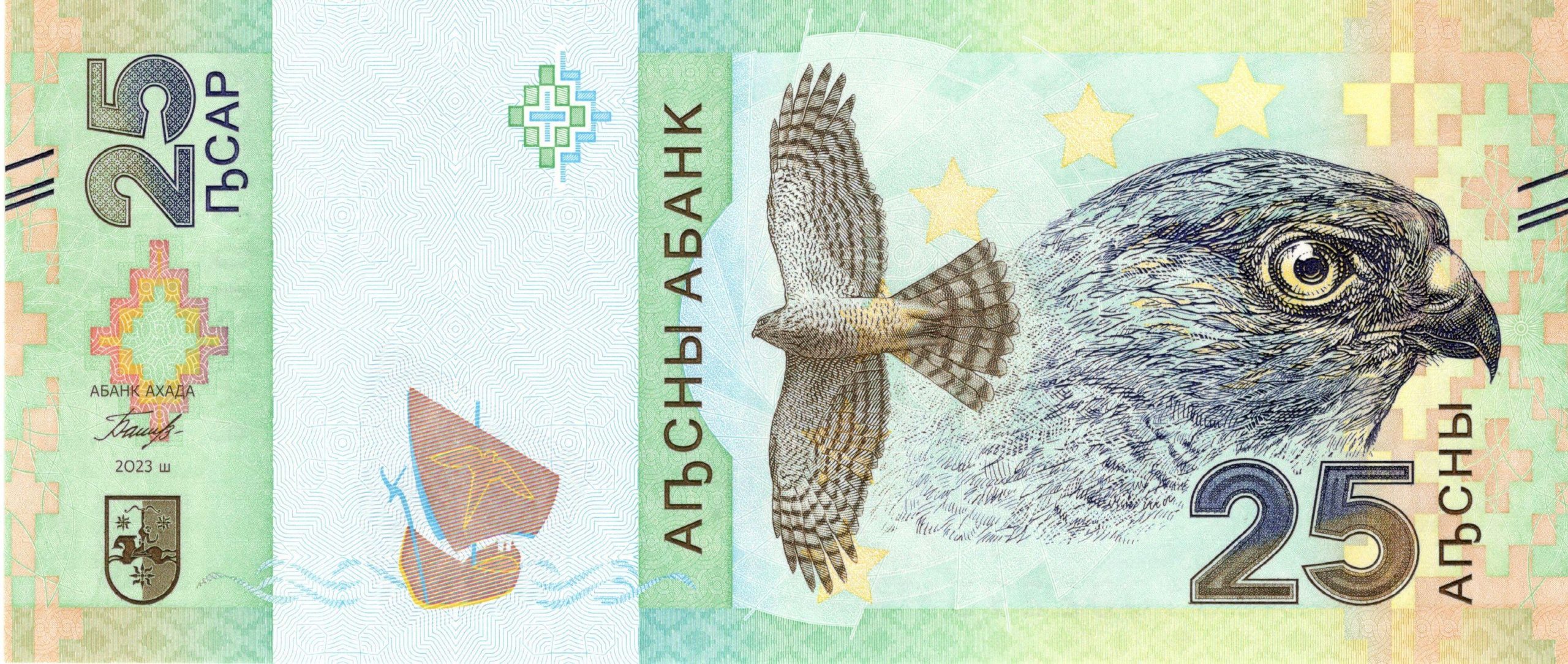
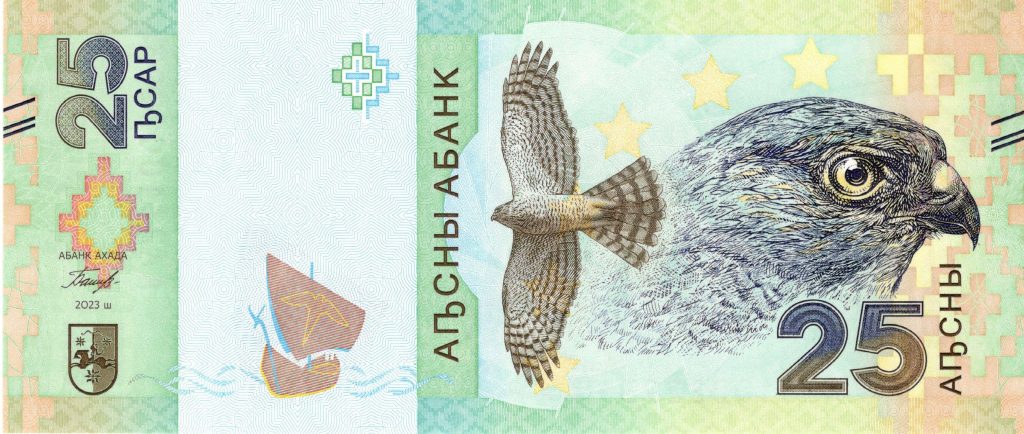
The 2023 “30th Anniversary of Victory in the Patriotic War” commemorative banknote of Abkhazia is far more than a monetary artifact. It is a carefully constructed historical narrative, designed to commemorate a decisive and emotionally charged moment in Abkhaz national history: the victory in the Patriotic War of 1992–1993. Through symbolism, imagery, and official legal status, the banknote functions as a portable memorial, carrying the memory of war, sacrifice, and political transformation into the present day.
This essay explores what the banknote commemorates, why the Patriotic War occurred, the historical and political background that led to conflict, who fought whom, when the war took place, how it ended, and why its outcome remains central to Abkhaz identity today.
What Does the Commemorative Issue Celebrate?
The 2023 commemorative issue marks the 30th anniversary of victory in Abkhazia’s Patriotic War. In Abkhaz historical memory, this war is understood not simply as a regional conflict, but as an existential struggle for survival, self-determination, and national continuity.
The term Patriotic War reflects how Abkhazians perceive the conflict: as a defensive war fought to protect their homeland, culture, and political autonomy. Victory in 1993 is regarded as the foundational moment of modern Abkhazia, shaping its institutions, borders, and sense of sovereignty.
By issuing a commemorative banknote rather than only medals or monuments, the state embeds this memory into daily civic life. The banknote honors fallen soldiers, acknowledges civilian suffering, and reinforces the narrative of victory as a unifying national achievement.
Historical Background: Abkhazia Before the War
To understand why the Patriotic War occurred, it is essential to examine Abkhazia’s historical position within the Caucasus.
Abkhazia lies on the eastern coast of the Black Sea and has a long history as a distinct cultural and political entity. Over centuries, it was influenced by Byzantine, Ottoman, and Russian rule. In the 19th century, Abkhazia became part of the Russian Empire, later transitioning into the Soviet system.
During the early Soviet period, Abkhazia held the status of a Soviet Socialist Republic linked by treaty to Soviet Georgia. However, in 1931, under Joseph Stalin—himself a Georgian—Abkhazia was downgraded to an Autonomous Soviet Socialist Republic within the Georgian SSR. This decision deeply affected Abkhaz political life and became a long-term source of grievance.
Throughout the Soviet era, Abkhazians frequently protested what they viewed as political marginalization, demographic pressure, and cultural assimilation policies. Tensions simmered beneath the surface, restrained by Soviet authority but never fully resolved.
The Collapse of the Soviet Union and Rising Tensions
The late 1980s and early 1990s were a period of dramatic upheaval across the Soviet Union. As central control weakened, long-suppressed ethnic and political disputes re-emerged with force.
In Georgia, a strong nationalist movement gained power, advocating for centralized authority and national unity. In Abkhazia, these developments raised fears that Georgian independence would lead to the erosion of Abkhaz autonomy or even cultural extinction.
In 1992, Abkhazia declared the restoration of its 1925 constitution, a move intended to reassert its political status. Georgian authorities viewed this as a separatist act and a direct challenge to territorial integrity.
This clash of visions—Georgian centralization versus Abkhaz self-determination—set the stage for armed conflict.
Why Did the Patriotic War Begin?
The immediate trigger of the Patriotic War was the entry of Georgian military forces into Abkhazia in August 1992. Officially, the operation was framed as an effort to protect railway infrastructure and restore constitutional order. In Abkhaz memory, however, it is remembered as an invasion.
For Abkhazians, the arrival of Georgian troops represented an existential threat. Many feared forced assimilation, loss of political rights, and cultural suppression. Resistance quickly organized around Abkhaz militias, supported by volunteers from the North Caucasus and other allies.
The war thus began as a struggle over political authority, but rapidly transformed into a broader conflict shaped by ethnic fears, historical grievances, and competing national narratives.
Who Fought in the War?
The Patriotic War of 1992–1993 was primarily fought between:
-
Abkhaz forces, including local militias, volunteers, and later more organized armed units
-
Georgian government forces, including the National Guard and allied paramilitary groups
The conflict also drew in volunteers from neighboring North Caucasian regions, who supported Abkhazia for reasons ranging from regional solidarity to shared historical experiences. Russia’s role, while complex and contested, was also significant in shaping the war’s outcome through political and military dynamics.
For civilians on both sides, the war was devastating. Entire communities were displaced, cities were damaged, and the social fabric of the region was permanently altered.
When Did the Patriotic War Take Place?
The Patriotic War lasted from August 1992 to September 1993, a little over one year. Despite its relatively short duration, the intensity of fighting and the scale of human suffering left deep scars.
Key phases of the war included:
-
Initial Georgian advances into Abkhazia
-
Abkhaz resistance and reorganization
-
Prolonged urban and mountain warfare
-
The decisive Abkhaz offensive in September 1993
The final battles culminated in the capture of Sukhumi, Abkhazia’s capital, marking the effective end of the war.
The Outcome: Who Won the War?
From the Abkhaz perspective, the war ended in victory. Georgian forces withdrew, and Abkhazia established de facto control over its territory. This victory is commemorated as the moment when Abkhazia secured its survival as a political entity.
However, the outcome also produced long-term consequences:
-
Abkhazia became de facto independent, though its status remains internationally disputed
-
Large-scale population displacement occurred, particularly affecting ethnic Georgians
-
Political relations with Georgia were fundamentally transformed and remain unresolved
Despite these complexities, within Abkhazia the victory is remembered as a defining national achievement, justifying the use of the term Patriotic War.
Why Is the Victory So Important Today?
Thirty years later, the memory of the Patriotic War remains central to Abkhaz political culture and identity. The victory is seen as proof of resilience against overwhelming odds and as the foundation upon which modern Abkhaz statehood rests.
Annual commemorations, memorials, and educational programs reinforce this narrative. The 2023 commemorative banknote fits squarely into this tradition, translating historical memory into a tangible, everyday object.
Symbolism of the 2023 Commemorative Banknote
The design of the 2023 banknote reflects this layered historical meaning.
-
Hawks and stars symbolize vigilance, freedom, and sacrifice
-
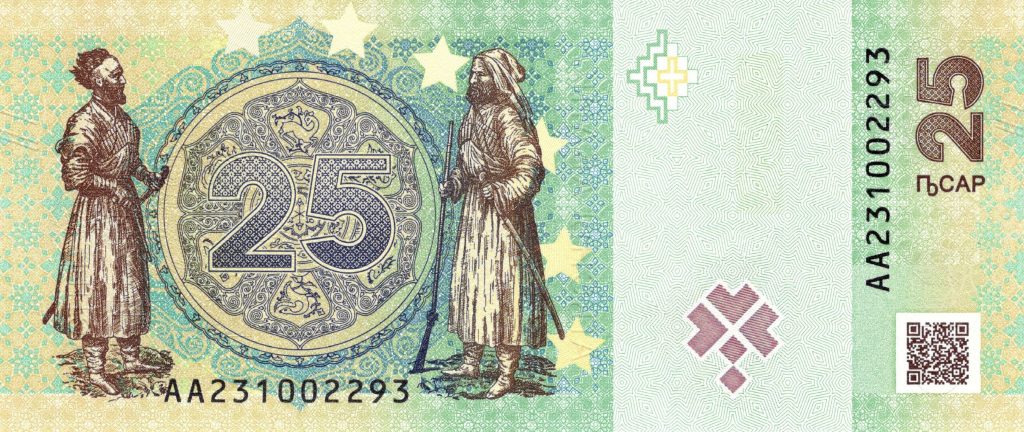
Soldiers with traditional and modern weapons represent continuity between past and present defense
-
Traditional ornaments assert cultural identity
-
The QR code bridges memory and modernity, signaling that history remains relevant in a digital age
By combining martial, cultural, and technological symbols, the banknote presents the Patriotic War not as a relic of the past, but as a living foundation of national consciousness.
The Patriotic War in Abkhaz Historical Narrative
Unlike purely academic histories, Abkhaz public memory frames the Patriotic War as a moral struggle between survival and erasure. This narrative emphasizes unity, sacrifice, and legitimacy derived from victory.
The commemorative banknote reinforces this interpretation, serving as both a historical statement and a political symbol. It asserts continuity between the sacrifices of 1992–1993 and the present-day aspirations of Abkhazia.