
Bhutan 100 Ngultrum Polymer Banknote 2025: Royal Symbolism, Mandala Cosmology, and Modern Design
The Bhutan 100 Ngultrum polymer banknote (2025 issue) stands as a vivid expression of Bhutan’s spiritual worldview, constitutional monarchy, and contemporary banknote technology. Issued by the Royal Monetary Authority of Bhutan, this denomination reflects how Bhutan integrates Buddhist cosmology and royal legitimacy into its national currency, transforming money into a cultural narrative rather than a purely economic tool.
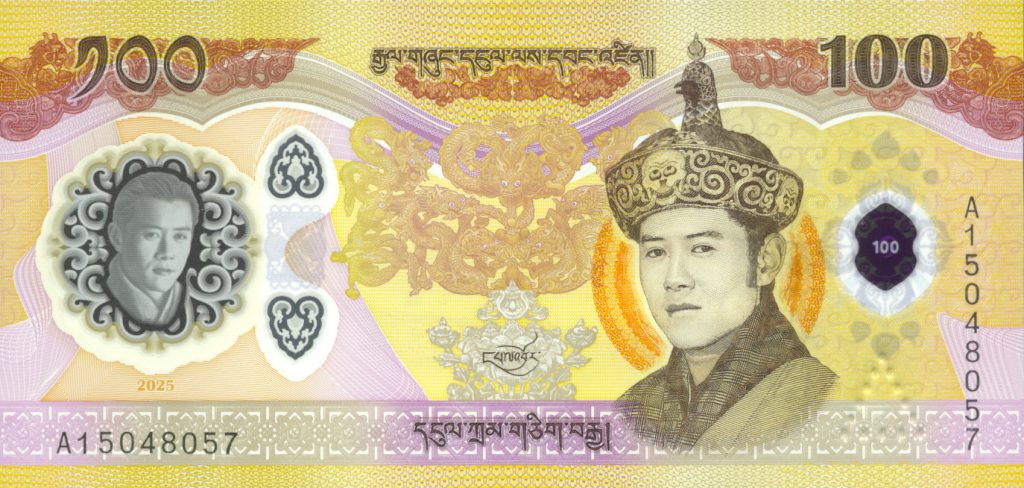
Printed on Safeguard polymer by De La Rue, the note measures 145 × 70 mm and is dominated by warm tones of yellow, brown, purple, and orange. The polymer substrate improves durability and allows refined transparency and watermark effects, while the design notably omits a traditional security thread, relying instead on layered imagery and advanced material security.
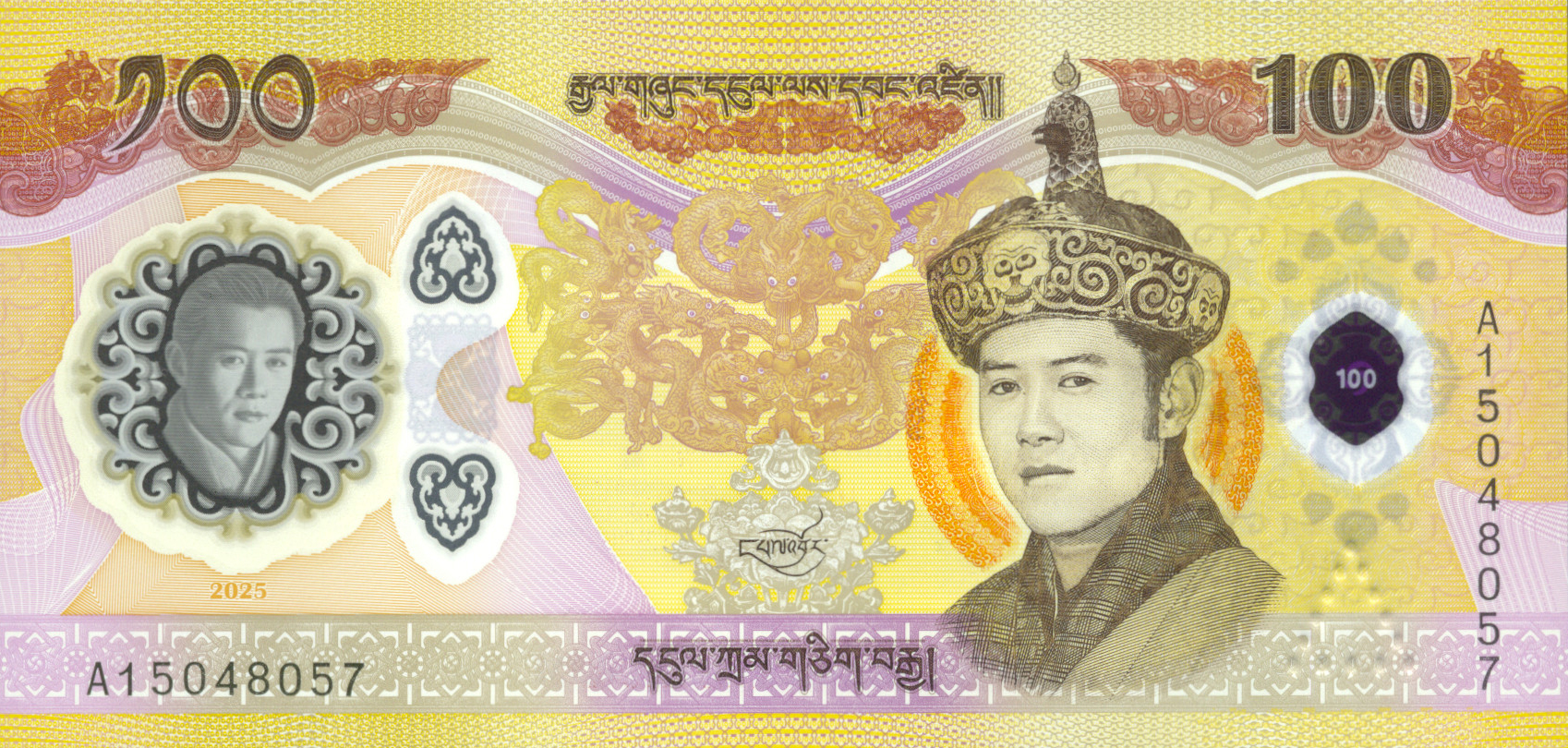
The front of the banknote features Dzongkha text and a striking cosmic mandala composition. At its center, five sensory offerings are presented to nine intertwined dragons, symbolizing prosperity, harmony, and divine protection bestowed upon the kingdom. The dragon—deeply linked to Bhutan’s identity as Druk Yul, the “Land of the Thunder Dragon”—reinforces sovereignty and spiritual guardianship. Anchoring the design is a dignified portrait of Jigme Khesar Namgyel Wangchuck, Bhutan’s fifth monarch, shown wearing the Raven Crown. His image represents constitutional continuity, unity, and the moral authority of the monarchy in modern Bhutan.
The reverse side shifts focus to governance and national institutions. At its center appears Tashichho Dzong, the seat of Parliament and the administrative heart of the capital, Thimphu. Above the fortress rises the Garuda, a powerful mythological bird symbolizing vigilance, protection, and the triumph of wisdom over chaos. The state seal appears alongside Dzongkha and English text, reinforcing both domestic identity and international readability.
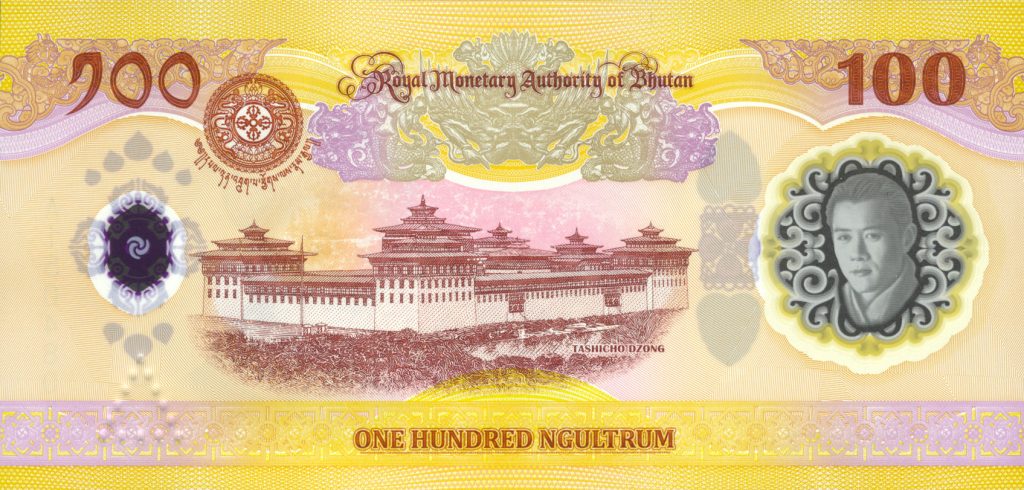
An interesting numismatic detail distinguishes this issue from previous depictions. The caption on the reverse spells the landmark as “Tashicho Dzong,” omitting the second “h” traditionally used in the established transliteration “Tashichho.” Whether this represents a typographical oversight or an intentional linguistic adjustment remains unclear, adding an element of scholarly and collector interest to the note.
Security features include a shadow watermark portrait of Jigme Khesar Namgyel Wangchuck, integrated seamlessly into the polymer substrate. While the absence of a conventional security thread may appear unusual, the overall design relies on polymer transparency, precise registration, and complex symbolic artwork to deter counterfeiting.
Dated 2025, bearing signature type “Tshogyel,” prefix A, and scheduled for introduction in early 2026, the 100 Ngultrum polymer banknote exemplifies Bhutan’s approach to currency as a bearer of values. It unites Buddhism, monarchy, and statecraft in a single visual language, offering collectors and citizens alike a compact yet profound representation of Bhutanese identity.