

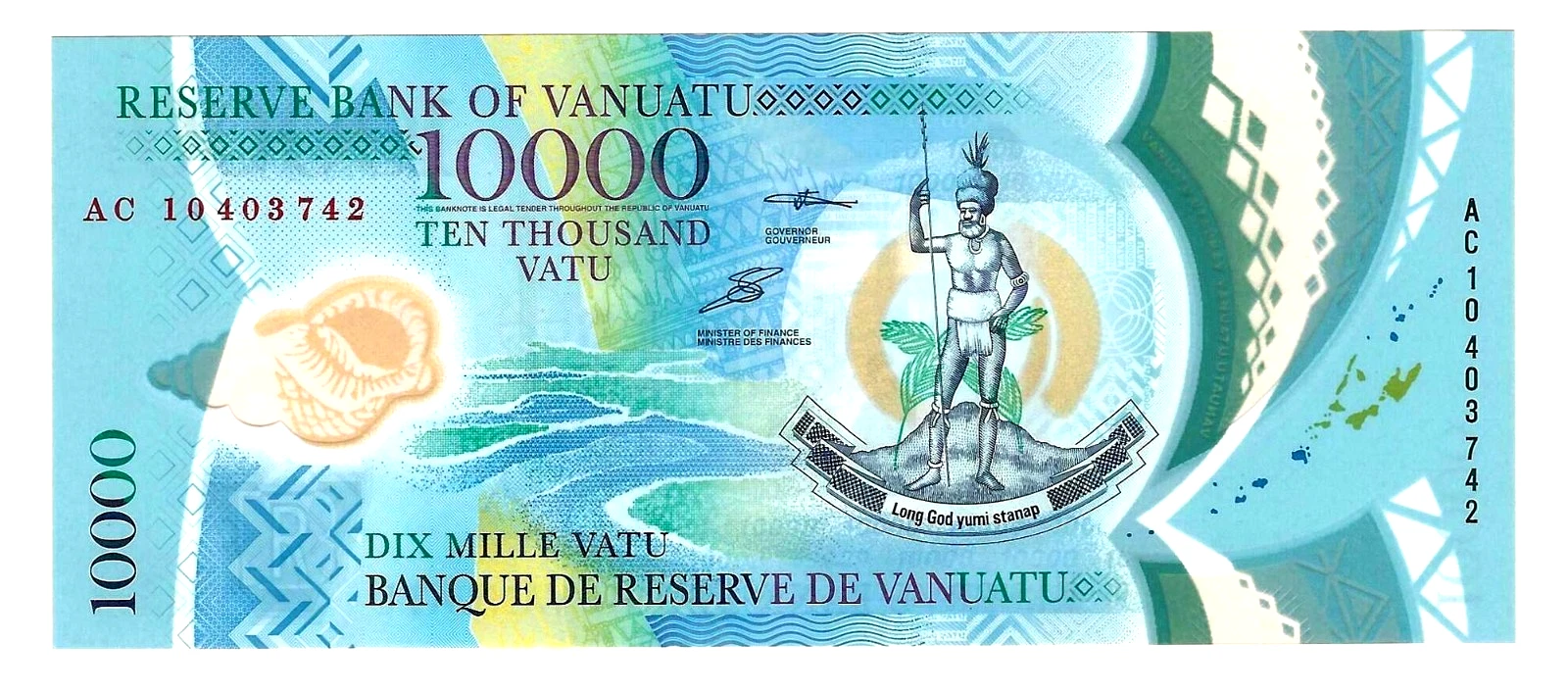
The 2010 Vanuatu 10,000 Vatu Polymer Banknote: Independence, Modernization, and Monetary Design
The 2010 Vanuatu 10,000 Vatu Polymer Banknote: Independence, Modernization, and Monetary Design
The 10,000 vatu polymer banknote issued in 2010 stands as one of the most significant modern currency issues in the South Pacific. Introduced on 28 July 2010 by the Reserve Bank of Vanuatu, this note commemorated the 30th anniversary of Vanuatu’s independence while simultaneously inaugurating a new, fully modernized banknote series. As the highest denomination in circulation, the 10,000 vatu note occupies a unique place in the country’s monetary system and in the field of contemporary banknote design.
Description of the Banknote
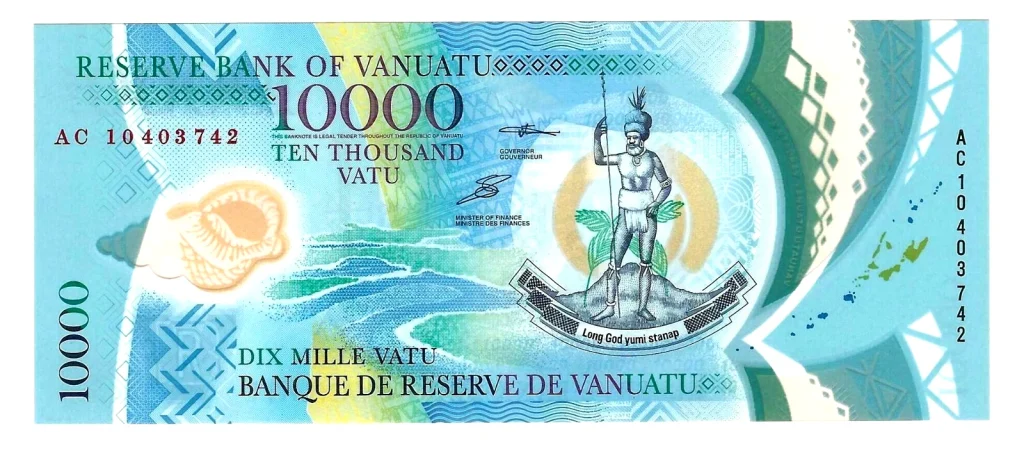
The 2010 10,000 vatu note is printed on polymer substrate, immediately distinguishing it from earlier paper-based issues. Visually, the note employs a cool, marine-inspired palette of blues and aquas, reflecting Vanuatu’s island geography and Pacific identity. The obverse features symbolic imagery associated with national development and communication, including representations of modern telecommunications infrastructure integrated with traditional motifs. Human figures rendered in a dignified, illustrative style emphasize continuity between past and present, while abstract wave patterns echo both the ocean environment and the flow of information.
On the reverse, architectural and cultural elements appear alongside telecommunications equipment, reinforcing the thematic focus on connectivity. The composition balances figurative imagery with open, translucent polymer windows, giving the note a sense of lightness and technical sophistication. The denomination “10,000 VATU” is prominently displayed, ensuring clarity in daily use while anchoring the note’s status as the country’s largest-value banknote.

Printing Technology and Security Features
A defining aspect of this issue is its polymer construction. Produced by Note Printing Australia, the note benefits from the durability, cleanliness, and anti-counterfeiting advantages associated with polymer technology. Compared with traditional cotton-based paper notes, polymer banknotes offer significantly longer circulation life, a critical consideration in Vanuatu’s humid tropical climate.
Security features include a transparent window with complex shapes, microprinted elements, iridescent inks, and finely detailed line work that is difficult to reproduce using conventional printing methods. The polymer substrate allows for see-through registration elements and tactile features that assist both the visually impaired and the general public in authentication. These technologies were introduced in direct response to growing counterfeiting pressures and wear-related issues affecting the older note series.
Historical Context and Monetary Reform
Vanuatu gained independence from joint British–French colonial rule in 1980, making 2010 a milestone year marking three decades of sovereignty. The decision to launch a new banknote series during this anniversary was both symbolic and practical. According to the Governor of the Reserve Bank at the time, Odo Tevi, the existing banknotes had come under increasing strain due to heavy circulation and security challenges. Many neighboring countries had already modernized their currencies, and Vanuatu’s 30th anniversary presented an opportune moment to do the same.
The 10,000 vatu note thus became a visual statement of national maturity—signaling that Vanuatu was not only commemorating its past but also investing in a resilient and future-oriented monetary infrastructure.
Thematic Meaning and Symbolism
The central theme of the note is telecommunications, chosen to reflect the liberalization of Vanuatu’s telecoms market in the late 2000s. This policy shift transformed communications across the archipelago, expanding mobile phone coverage and internet access to remote islands. By embedding this theme into the nation’s highest denomination, the Reserve Bank underscored the role of connectivity as a driver of economic inclusion, governance, and social cohesion.
Traditional motifs and human figures coexist with antennas and modern equipment, visually expressing the coexistence of kastom (customary culture) and technological progress. This synthesis is particularly meaningful in Vanuatu, where cultural identity remains strong across diverse island communities. The banknote thus functions as a portable narrative of national development—one that citizens encounter in everyday economic life.
Artistic and Numismatic Significance
From a numismatic perspective, the 2010 10,000 vatu note is notable for combining commemorative purpose with general circulation. Unlike many anniversary issues that are purely symbolic or limited to collectors, this note was designed for daily use, circulating in parallel with earlier notes of the same denomination. This dual role enhances its research and collecting value, as it represents a moment when commemoration, policy reform, and practical currency needs converged.
Artistically, the note reflects contemporary trends in banknote design that favor thematic storytelling, layered symbolism, and advanced materials. The careful integration of transparent polymer elements into the visual composition demonstrates a mature design approach, where security features become part of the aesthetic rather than intrusions upon it.
Conclusion
The 2010 Vanuatu 10,000 vatu polymer banknote is far more than a high-denomination medium of exchange. It is a carefully crafted artifact marking 30 years of independence, a response to technological and security challenges, and a visual celebration of modernization in a Pacific island nation. For researchers and collectors, it offers a compelling case study in how currency design can embody historical memory, economic policy, and artistic innovation within a single, functional object.